









Warning: this contains a lot of nerdy trainer talk.
In 1991, I spent a long summer working in California, most of it dressed in Champion Sport and Russell Athletic college sweats and hoodies, gifted by friends on the summer camp where I worked. More often than not, I wore them with a pair of burgundy and white Nike Cortez, bought in Dick’s Sporting Goods in Santa Cruz.
Already established as both a sporting and streetwear icon, they came back with me to university in Leeds, where they made it to the odd lecture, a few gigs, and onto the dancefloors at Back to Basics, Vague, the Hacienda, and various other clubs we trekked to in search of a good rave. (A dear friend from Leeds still fondly remembers the purple bullets - she’s a lawyer now, not a club kid.)
The Cortez was the brainchild of Nike co-founder Bill Bowerman, the legendary coach of the University of Oregon’s track team. He developed it with the Onitsuka Co. of Japan, makers of the Tiger running shoe, which he and Nike’s other co-founder, Phil Knight, distributed in the US.
Bowerman had convinced the founder, Kihachiro Onitsuka, to develop a new design, blending the features of two of their most popular styles, the TG-21 and TG-22. In 1967, the TG-24 ‘Mexico’ was born. It went through a few name changes — first to the Aztec, and then, following a lawsuit from Adidas, to the Cortez - and became their bestselling shoe.
But the relationship between Knight and Onitsuka broke down, and in 1972 Knight launched his own brand, Nike, taking the Cortez design with him. They secured the legal rights to both the design and the name in a trial in Oregon in 1974. The rest, as they say, is history.
The success of the design travelled around the world, eventually making its way to Bolton in Lancashire, where Norman Walsh’s eponymous shoe brand was making waves in the British running scene. Walsh’s swoosh is reminiscent of that of Onitsuka Tiger, so it’s no surprise that a Cortez-inspired design found its way into the Walsh running collection.
It was that 1970s design - with its distinctive toe piece - that I worked on with the team at Walsh to create the Community Clothing Catlow, named (like the Beacon and Parlick before it) after Catlow Fell in Lancashire, visible from my house in North Yorkshire.
Our version has an all-suede upper with leather detailing (my first Cortez were all leather), and comes in four great colourways - including one burgundy, as a nod to my old Nikes.
The Catlow is available to buy now.
Warning: this contains a lot of nerdy trainer talk.
In 1991, I spent a long summer working in California, most of it dressed in Champion Sport and Russell Athletic college sweats and hoodies, gifted by friends on the summer camp where I worked. More often than not, I wore them with a pair of burgundy and white Nike Cortez, bought in Dick’s Sporting Goods in Santa Cruz.
Already established as both a sporting and streetwear icon, they came back with me to university in Leeds, where they made it to the odd lecture, a few gigs, and onto the dancefloors at Back to Basics, Vague, the Hacienda, and various other clubs we trekked to in search of a good rave. (A dear friend from Leeds still fondly remembers the purple bullets - she’s a lawyer now, not a club kid.)
The Cortez was the brainchild of Nike co-founder Bill Bowerman, the legendary coach of the University of Oregon’s track team. He developed it with the Onitsuka Co. of Japan, makers of the Tiger running shoe, which he and Nike’s other co-founder, Phil Knight, distributed in the US.
Bowerman had convinced the founder, Kihachiro Onitsuka, to develop a new design, blending the features of two of their most popular styles, the TG-21 and TG-22. In 1967, the TG-24 ‘Mexico’ was born. It went through a few name changes — first to the Aztec, and then, following a lawsuit from Adidas, to the Cortez - and became their bestselling shoe.
But the relationship between Knight and Onitsuka broke down, and in 1972 Knight launched his own brand, Nike, taking the Cortez design with him. They secured the legal rights to both the design and the name in a trial in Oregon in 1974. The rest, as they say, is history.
The success of the design travelled around the world, eventually making its way to Bolton in Lancashire, where Norman Walsh’s eponymous shoe brand was making waves in the British running scene. Walsh’s swoosh is reminiscent of that of Onitsuka Tiger, so it’s no surprise that a Cortez-inspired design found its way into the Walsh running collection.
It was that 1970s design - with its distinctive toe piece - that I worked on with the team at Walsh to create the Community Clothing Catlow, named (like the Beacon and Parlick before it) after Catlow Fell in Lancashire, visible from my house in North Yorkshire.
Our version has an all-suede upper with leather detailing (my first Cortez were all leather), and comes in four great colourways - including one burgundy, as a nod to my old Nikes.
The Catlow is available to buy now.


I have long fancied including a classic Guernsey in our collection and so last summer I was delighted to have the chance to visit the Le Tricoteur factory on the island's western coast.
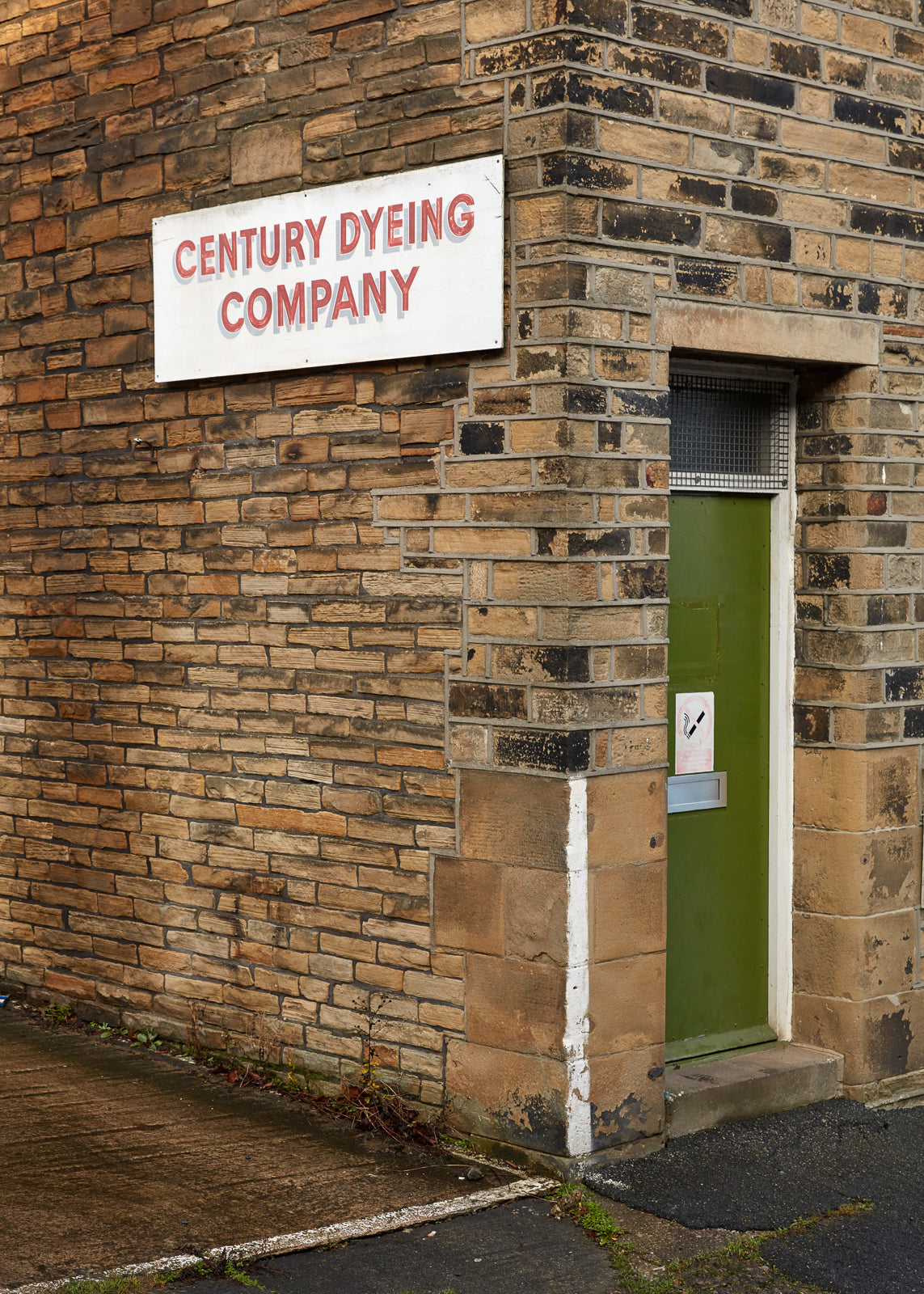

Everything we do is a celebration of the people, the skills and the traditions of the amazing factories we work with, all of them the very best of their kind, all of them deeply embedded in the culture and history of their communities.

Great photographs don’t just show our clothes, they tell our story and connect you with what we do.
Our philosophy around photography is really simple: just keep it honest. Shoot the clothes as they are, don’t alter or pin them, don’t retouch. When our clothes arrive and you put them on we want them to look like the clothes you see in the pictures.